|
|
Genre: Adventure Developer & Publisher: Sierra On-Line Released: June 30, 1995 Requirements: OS: Windows XP or higher Processor: Minimum, 1.0 Ghtz processor Memory: Minimum, 256 MB RAM Graphics: DirectX 7 compatible Storage: 3200 MB available space
|
|
|
|
Genre: Adventure Developer & Publisher: Sierra On-Line Released: June 30, 1995 Requirements: OS: Windows XP or higher Processor: Minimum, 1.0 Ghtz processor Memory: Minimum, 256 MB RAM Graphics: DirectX 7 compatible Storage: 3200 MB available space
|
|
|
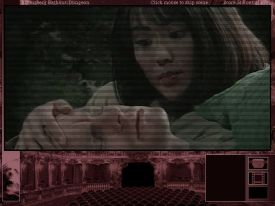
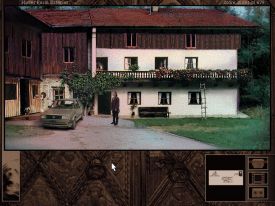
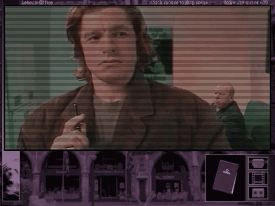
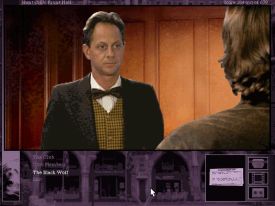
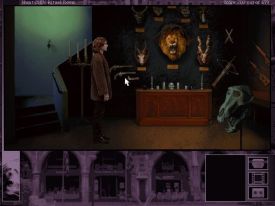
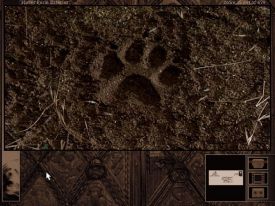
By flotsam Gabriel Knight 2: The Beast Within Sierra On-Line Released in 1995, The Beast Within is generally lauded as a classic of the genre and was an original entry into the GB Hall of Fame. A follow up to the very successful Sins of the Father, it reunited Sierra and Jane Jensen and changed the first game’s 2D animation to full-motion video (FMV). I played it back then, not when it was released but probably not too long after. I remember being impressed at the time, but haven’t played it since. I confess I am somewhat reluctant to revisit favourite games/books/movies etc. from days gone by in case they don’t live up to my recollection, but for a variety of reasons I decided to replay this. I had also had some recent good experiences with other venerable games be they original versions (Sanitarium) or remastered ones (GK1, Amerzone). Occupying six CDs when first released, thanks to GOG it can now be played on modern systems with nary a CD in sight, and no need to wrestle with bits of third-party software to get it running. So how did it hold up? In a few words, rather well. In many more, read on. The game picks up about a year after the events of the earlier game. Gabriel has left behind his New Orleans bookshop and taken up residency in his family’s castle in Germany, and has seemingly settled into his ancestral role as a Schattenjäger. Translated as ‘shadow hunter,’ those that came before him have combatted supernatural evil through the ages, something which might well be required if the recent mutilation deaths are caused by something other than escaped wolves from the local zoo. At the behest of the local population, Gabriel begins to investigate. It is a detailed fantastical story and elaborate in its telling. It plays out against a canvass dotted with historical details involving Ludwig II of Bavaria, including his relationship with Franz Wagner, and opera plays a part. As do the Bavarian forests, an aristocratic hunting club, a pair of demonologists and a mysterious Black Wolf, just to mention a few elements. It isn’t beyond a surprise or two, and delivers a rich narrative tapestry. Whilst some aspects of the telling are the result of finding and reading books and notes, most of it is unfurled through conversations and interactions with a plethora of other characters. All of which occurs in FMV, so you could reasonably describe this as an interactive movie and a lengthy one at that (15-20 hours). You will certainly do a lot of listening and watching. You will also gather items and use them to progress your endeavours. Some of them are deployed in ways I would never have dreamt of (a cuckoo clock for instance), but by and large I thought how they were used was fair and reasonable. Some can be combined, the tape recorder can be used creatively, and a notebook can be used on certain things to effectively ‘take a note.’ Simply click the inventory icon bottom right to open it, and then click again on an item to be able to use it; perhaps in the game world, or on another item, or with the magnifying glass icon to examine it further (most often used to read letters, books, journals etc. you may have found). Characters come with a list of topics to ask them about (topics exhaust once there is nothing more to ask), and showing or giving a character an item might be pertinent as well. Topics might well depend upon fulsome investigation, or other relevant conversations, in order to have triggered the required query, and in that regard the game can be somewhat opaque at times. If for instance you haven’t looked at the crucial painting in one place, you won’t trigger the conversation and interaction needed to move on in another; the fact that you might not know you need to look at it and that therefore that is what is missing can leave you with no clue as to what you should do. Needless to say, thorough exploring is well advised. You will do a lot of back and forth between locations, much by design and a fair bit due to trying to work out what needs doing next. There is an in-game hint button which can help, as it identifies any locations on the maps (which you use to get around) where there are still things to do in the particular Chapter. It is limited in nature given things in one place are needed in order to do things in another, but it can rule out further searching of locations. And if you should find that you need outside assistance, numerous walkthroughs will help get you back on track. There are two playable characters, Gabriel himself and Grace Nakimura, each being in different locations (until they’re not) doing different but interconnected things. You don’t choose between them (until you do), each Chapter alternating between them. It added some variety to the goings-on that I rather enjoyed and which benefitted the run-time. Gabriel isn’t Tex Murphy but he isn’t far off. Less gritty but a lot more pretty, his somewhat rakish charm is an asset that clearly assists him to get people to talk to him. Plus the whole Schattenjäger bloodline thing doesn’t hurt either. Grace was present in the earlier game but is far more prominent here. Initially Gabriel’s bookshop assistant and researcher, she now presents as his investigative partner. Refusing to be sidelined when something big is going on, she travels to Germany and inserts herself into his endeavours, bringing her historical research proficiency and dogmatic and resourceful nature to bear. Both are well acted as are the bulk of the other characters. Some are a little overblown, but some are meant to be. It’s hard to argue the makers didn’t nail this aspect. I mentioned the maps and you will get these once your playable character obtains the keys to their cars. This will take Grace somewhat longer than Gabriel, but once secured you can venture further abroad. Some of the locations are single buildings, others are more extensive street scenes, and fulsome exploration is, as I said, recommended. As is taking a note or two about what specific locations (e.g., club, post office, inn) are located in which geographic location. You explore with the curser within the game window, and the default arrow will change to a sword in response to a hotspot that can be inspected. It might pull you further into a scene where further exploration might occur, engage you in conversation, or simply have you pick up an item. You might also get feedback such as “who can I call” if e.g., you click on a phone, indicating something more is required. It will also indicate exits where these are available, enabling you to move about within the various locations. The soundtrack can be a touch cheesy at times, but it isn’t ever present, and it can also be turned right down. Which I did, as I preferred the other aspects of the soundscape. The game played in about the middle three quarters of my wide-screen monitor, and the FMV window was the top two thirds of that. If you choose the ‘big movie’ option, the cutscene videos will fill that window, and the quality is rather good, especially considering its age. You can also choose ‘little movie,' which sharpens the quality but significantly reduces the size of the video. Usefully you can toggle between them, so check both out and decide what suits. You can die or otherwise fail, but not until the back end of the game, and whether or not you have saved you will be given the option to try again and be restored to the start of the relevant sequence. You can save at will, replay various cutscenes, and a very typical Sierra counter (x/679) keeps track of your progress. There are some maze-lite locations and the last two puzzles might cause some consternation. I certainly fumed in frustration in the basement until I had worked out what it was that I was required to do, at which time it became a bit of olfactory fun. Ditto the last room which is more trial and error than I would have liked. The Beast Within has its foibles but what game doesn’t? The truth is they don’t make games like this anymore, which is reason enough to play. More than that though, it’s a rich and ambitious adventure, a showcase for how varied the genre can be. If you have never played it then do yourself a favour, and if you haven’t played it recently give it another go. I doubt you will be disappointed. I played on: OS: Windows 11, 64 Bit Processor: Intel i7-9700K 3.7GHz RAM: Corsair Dominator Platinum RGB DDR4 32GB Video card: AMD Radeon RX 580 8192MB
|